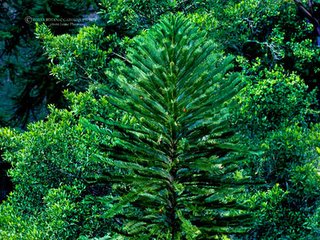
Disease threatens ancient Australian trees

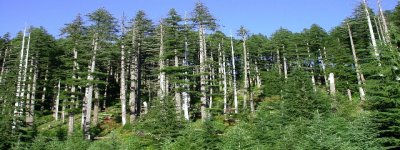
ancient australian treesScientists said it was ‘like finding a small dinosaur’. The tree is known from its fossils in ‘dinosaur age’ rock, the Wollemi pine, often described as a living fossil, was thought to be extinct until 1994, when a park ranger stumbled upon a stand of fewer than 100 trees in a remote gorge in Wollemi National Park, 120 miles west of Sydney.

But the stand has been endangered by a fungus-like disease, Phytophthora cinnamomi, that was detected in two trees in November last year and was almost certainly introduced by an unauthorized visitor, New South Wales state environmental department spokesman John Dengate said.

"It is an endangering factor," Dengate said. "Nobody can be sure at this stage how big a threat it poses, but we're treating it very, very seriously."

Dengate said the department was hopeful that treatment would wipe out the threat to the stand.

"We understand that people are really keen to see the trees in their natural environment, but there are only a few dozen left and they are extremely vulnerable to infections so we're asking people to stay away," he added.

Source: Associated Press.

Parts of Portugal could become desert

portugalPortugal's south risks turning into a desert as temperatures rise, its coasts will erode and droughts will become more frequent, the country's most complete report on the impact of global warming showed on Monday.

The report, which is the result of a research project that started in 1999, concludes that Portugal will be one of the hardest hit by global warming in Europe in coming decades.

"I think the biggest impact is the risk of desertification in the interior of the south," Filipe Duarte Santos, a physics professor who oversaw the project, told Reuters.

"...The indication is less rainfall, higher temperatures, more frequent extreme events, such as droughts which will become more frequent."

Freak weather has already hit west Europe's poorest country. Last year Portugal recorded its worst drought since 1931 while this weekend snow fell in Lisbon for the first time in decades.

Last year's forest fires destroyed 325,226 hectares (803,600 acres), the second worst in history, according to a government report released on Monday.

Portugal's average maximum temperature has risen about 0.5 degree Celsius during each of the past three decades, it said.

The report covered the impact of global warming in Portugal on water resources, agriculture, fisheries, human health, energy and coastal regions.

During this century, maximum summer temperatures will rise between three and seven degrees, with a "major increase in the frequency and intensity of heat waves", the report said.

Rainfall could decrease between 20 and 40 percent over the next 100 years, mostly because of increased concentration of rainfall during the winter months, which could cause floods.

The report predicts an increase in storms, including the possibility of storm surges of up to one meter at some points along Portugal's coast. That could raise the rate of coastal erosion by between 15 and 25 percent by the end of the century.

Apart from increased risk of forest fires, forests in dry areas such as the central Alentejo region could disappear altogether. Some tree species could migrate from the south to the north and from the interior to the coast, the report said.

Consumers worried about heating bills could take some comfort from the report, although they may find themselves instead spending to power their air conditioners.

Source : Reuters.

Carcass of unknown animal found

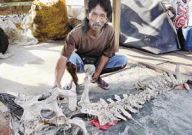
The skeletal remains of an animal found on the coast here has caused a stir among villagers at Kampung Pengkalan Sungai Udang in Telok Gong.

Fishermen looking for worms for bait near Pulau Carey spotted the rotting carcass embedded in mud over a week ago, but parts of the remains were only taken to the village two days ago.

Arbain Salleh, who recovered the remains, said it was not an animal he had ever seen before.

"I’ve been fishing in these waters for more than 20 years but I never came across an animal like this," he said.

The 45-year-old fisherman said the animal could have been up to seven metres long, although he only managed to bring back bones measuring up to 1.5m.

"The rest is still rotting in the mud, but I will bring it up gradually, so that it can be identified," he said.

Arbain said there was speculation among the villagers that the remains were of a saltwater crocodile, but a pawang (medicine man) who specialised in catching crocodiles had discounted that possibility.

A fisheries officer in Port Klang was called in by villagers, but could not identify the animal.

"It’s like nothing I’ve seen before, but these are partial remains so I don’t want to speculate," he said.

The officer said an expert from the Fisheries Research Institute in Terengganu would have a look at the remains, and DNA samples would be taken to determine what it was.

Is "Deblobbing" responsible for the Mountains' uplift ?

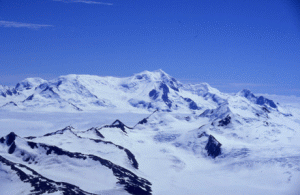
Is Deblobbing responsible for the mountains upliftTwo new studies by a University of Rochester researcher show that mountain ranges rise to their height in as little as two million years--several times faster than geologists have always thought. Each of the findings came from two pioneering methods of measuring ancient mountain elevations, and the results are in tight agreement.

"These results really change the paradigm of understanding of how mountain belts grow," says Carmala Garzione, assistant professor of earth and environmental sciences and co-author of both papers. "We've always assumed that the folding and faulting in the upper crust produced high elevation mountains. Now we have data on ancient mountain elevation that shows something else is responsible for the mountains' uplift."

Garzione's recent work suggests that the Andes shot up between 10 million and 7 million years ago.

If the Andes rose a dramatic kilometer per million years as the studies suggest, scientists can now assign a very specific - and very controversial - process to their uplift.

"Deblobbing" may not sound like a very scientific word, but it's the term given to a dense root beneath the Earth's crust--a blob--that becomes unstable and begins to flow downward into the earth's mantle under the force of its own mass, until it detaches. When two tectonic plates collide, such as the Nazca oceanic plate in the southeastern Pacific colliding with the South American continental plate, the continental plate usually begins to buckle. Floating on a liquid mantle, the plates press together and the buckling creates the first swell of a mountain range.

Below the crust, however, there also is a kind of buckling going on in the solid portion of the upper mantle. This dense mantle root clings to the underside of the crust, growing in step with the burgeoning mountains above. This dense root acts like an anchor, weighing down the whole range and preventing it from rising, much like a fishing weight on a small bobber holds the bobber low in the water. In the case of the Andes, they swelled to a height of about one kilometer before the mantle root beneath them disconnected and sunk into the liquid mantle. The effect was like cutting the line to the fishing weight--the mountains suddenly "bobbed" high above the surrounding crust, and in less than 3 million years, they had lifted from one kilometer to roughly four.

This process had been proposed since the early 1980s, but it has never stood up to scrutiny because these techniques to estimate surface elevation have only been recently developed.


For more details.

Scorpion lived for 15 months without food or water

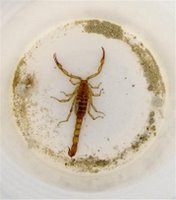
Scorpion Lives for 15 Mo. Inside FossilA scorpion lived for 15 months without food or water inside the plaster mold of a dinosaur fossil, breaking free only when a scientist broke open the mold.

Don DeBlieux, a paleontologist for the Utah Geological Survey, said he was sawing open the plaster mold when the scorpion wriggled from a crack in a sandstone block.

DeBlieux is still chipping away at the 1,000-pound rock to expose the horned skull of an 80-million-year-old plant eater — a species of dinosaur he says is new to science.

The scorpion "must have been hanging out in a crack the day we plastered him," DeBlieux said Thursday.

He discovered the two-inch critter on Jan. 5 after spending two months carefully removing the plaster mold. DeBlieux said he'll spend more than 500 hours cutting the fossilized skull out of sandstone using tiny pneumatic jackhammers.

It took three and a half years to cut the sandstone block in the field, where researchers encased it with plaster. They moved it by helicopter from the Grand Staircase Escalante National Monument to a laboratory in Salt Lake City.

Scorpions, which eat insects, are capable of surviving for months without feeding or moving in a sleep period known as diapause, said Richard Baumann, a Brigham Young University zoologist.

Under other circumstances, the scorpion might have met an untimely end, but DeBlieux said he wanted respected the creature's will to survive. He set the scorpion free in a field on the west side of Salt Lake City.

Two new lakes found beneath Antarctic ice sheet

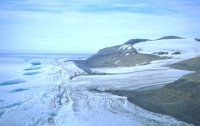
Two new lakes found beneath Antarctic ice sheetAncient water bodies may contain ecosystems adapted to life beneath more than two miles of ice.

The Earth Institute at Columbia University - Lying beneath more than two miles of Antarctic ice, Lake Vostok may be the best-known and largest subglacial lake in the world, but it is not alone down there. Scientists have identified more than 145 other lakes trapped under the ice. Until now, however, none have approached Vostok’s size or depth.

In the February 2006 issue of Geophysical Review Letters, scientists from the Lamont-Doherty Earth Observatory, a member of The Earth Institute at Columbia University, describe for the first time the size, depth and origin of Vostok’s two largest neighbors. The two ice-bound lakes are referred to as 90ÂșE and Sovetskaya for the longitude of one and the Russian research station coincidentally built above the other. The scientists’ findings also indicate that, as suspected with Lake Vostok, an exotic ecosystem may still be thriving in the icy waters 35 million years after being sealed off from the surface.

The lake depths, estimated to be at least 900 meters, were calculated from gravity data taken during aerial surveys in 2000 and 2001. Because gravitational force is directly related to mass, a decrease in gravitational pull over the ice sheet corresponds to a decrease in mass beneath the ice. “Over the lakes, the pull of gravity is much weaker, so we know there must be a big hole down there,” said Bell.

Their depth, along with the fact that they are parallel to each other and Lake Vostok, indicate that the lake system is tectonic in origin, the authors conclude.

This, along with the tectonic origin of the lakes, supports the idea that despite climate changes on the surface over the last 10 million to 35 million years, the volume of the lakes have remained remarkably constant, providing a stable, if inhospitable, environment that may harbor an ancient and alien ecosystem adapted to life beneath the ice sheet. However, just how, when or even whether scientists will risk the possibility of contaminating the lakes to confirm their suspicions remains the subject of an ongoing international debate.

The study was supported by the Lamont-Doherty Earth Observatory, the Palisades Geophysical Institute, NASA, and the National Science Foundation.

Related Entries : Melting of permafrost threatens homes and roads.
World is at its 'hottest' since prehistory.
Global warming may be shrinking Alaska’s lakes.

Moon Is Dragging Continents West

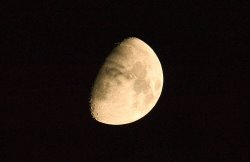
Moon Is Dragging Continents WestSomeday not so soon Washington, D.C., may find itself about where San Francisco is now. According to a recent study, Earth's surface may be slipping slowly westward, dragged by the same lunar forces that produce tides.

In a study published in the January-February issue of the Geological Society of America's journal Bulletin, Doglioni and a team of Italian and U.S. scientists argue that the westward motion is due to the tidal attraction of the moon.

Miniature Asian fish sets a whale of a record

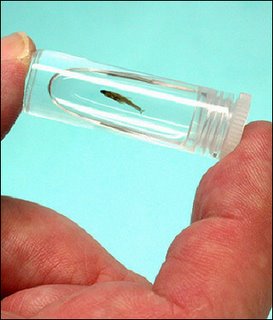
tiniest asian fishScientists from Europe and Singapore say they have discovered the world's tiniest fish - a species that lives in peat wetlands in Southeast Asia and, when fully grown, is the size of a large mosquito.

The record-busting newcomer to the biodiversity book, Paedocypris progenetica, is a distant cousin of the carp, say the discoverers, who publish their findings on Wednesday in Proceedings of the Royal Society B, a British journal.

Skinny and transparent, the elusive fish lives in highly acid peat swamps on the Indonesian island of Sumatra and in the Malaysian part of Borneo that are threatened by forestry and agriculture.

These so-called "blackwater" swamps are a unique landscape of flooded trees growing in water-logged, soft peaty soil that is often several meters (10 feet) thick.

The water is stained reddish-black, like very dark tea, appearing black at the surface. It is extraordinarily acidic, having a pH3 value of only three, the same as a sour apple.

The scientists needed a special stereoscopic microscope to accurately measure the fish.

The smallest adult specimen they netted was a mature Paedocypris progenetica female, found in Sumatra, that came to just 7.9mm (0.31 of an inch) from nose to tail, making it not only the world's smallest fish but the smallest vertebrate too.

She nudged out the previous record holder, a marine fish of the Western Pacific called the dwarf goby (Trimmatom nanus), which comes in at 8mm (0.32 of an inch) at sexual maturity.

"The discovery of such a tiny and bizarre fish highlights how little we know about the diversity of Southeast Asia," said Kottelat.

"This is all the more serious because the habitat of this fish is disappearing very fast, and the fate of the species is now in doubt."

Nuclear Energy and its effect on Environment

Nuclear Energy and its disastrous effect on Environment"Britain has 2.3 million cubic metres of nuclear waste stored around the country - more than enough to fill the Albert Hall five times. Exposure to even a tiny amount of the most potent type could kill an adult within two minutes - and it remains lethal for one million years. It will cost £85 billion to bury all this radioactive rubbish - but our governments have dodged the decision of where to put it for 30 years. As Tony Blair takes the first steps towards building ten new nuclear reactors to plug the looming energy gap, shouldn't we clear up this mess first ?" - the Independent.

Alun Ffred Jones, Plaid’s spokesman for economic development, said, "There are too many dangers with nuclear power, such as their potential for being targets for terrorist attacks and the catastrophic consequences of accidents. The Labour Government argues that nuclear power is an environmentally friendly solution for energy generation, but I see nothing environmental about all the nuclear waste that would have to be stored."

But the sensitive issue of dumping of the highly radioactive wastes is still unsolved. The waste disposal should be treated with utmost priority since the nuclear wastes can remain active for many thousand of years. Much of the waste inventory - some 241,000 cubic metres - is classified as intermediate. It is made up mainly of bulky items such as contaminated components of nuclear reactors and the metal casings used to house nuclear fuel rods. High-level waste, which is so radioactive it generates heat, comes mainly from the waste products from reprocessing spent nuclear fuel. It is estimated to total 1,340 cubic metres - just 0.1 per cent of the total waste by volume - yet accounts for 95 per cent of the total radioactivity of the entire waste inventory.

Though nuclear power does not emit carbon dioxide into the atmosphere so chances of air-pollution is much less, but other health and environmental hazards are associated with nuclear energy.

From mining of uranium through fuel processing to waste disposal, the use of nuclear energy involves radioactive material. The effect of nuclear waste can be more disastrous than the conventional environmental pollution. Exposure to radiation can cause genetic mutations, serious illness, and even death. The threat of accidents and the possibility that nuclear materials could get into the wrong hands contribute substantially to public fears about this resource. Even the normal operation of a nuclear power plant creates low-level radioactive waste in the form of ordinary trash, tools, clothing, and other contaminated items that must be carefully isolated from other materials.

Though the nuclear power is clean, and its role in reducing environmental pollution and slowing down climate change shall be acknowledged to promote its further development, but an environment-friendly way should be adopted for the dumping of deadly nuclear wastes.


Nuclear Power is not the answer.

Drought, anthrax threaten rare zebra with extinction

Drought, anthrax threaten rare zebra with extinctionOutbreaks of deadly anthrax exacerbated by a searing drought that has hit east Africa has killed scores of rare Grevy's zebras in Kenya and is threatening the endangered species with extinction, wildlife officials and scientists have said.

The zebras, known for their narrow stripes and large ears, are dying of anthrax at an alarming rate in the scrub-peppered, sprawling plains in and around Kenya's central Samburu National Reserve, one of their last remaining habitats, and more are feared to have perished further north, they said.

"They have died in the dozens in the northern part of the reserve and their carcasses are littered all over," said Fred Perezo Sunday, who administers Samburu for the Kenya Wildlife Service (KWS). "They face extinction."

Fewer than 5,000 Grevy's zebras are believed to live in the wild, nearly all of them in the vicinity of Samburu, about 230 kilometers (145 miles) north of Nairobi, and further north towards Kenya's border with Ethiopia.

The region is one of the worst-affected by the drought that has killed at least 40 people, threatens millions with famine, decimated livestock herds and placed Kenya's famed world-reknowned wildlife at risk.

In addition to drying up watering holes and making food scarce, the drought has stirred up naturally occuring anthrax spores from the parched earth, which are now exacting a heavy toll on the Grevy's zebra, a species less hardy than its mountain and plain cousins, officials said.

In the course of one week in early December, seven Grevy's zebras were found dead in the reserve and many of their carcasses indicated that blood had oozed from their body orifices before death, a characteristic of anthrax, it said.

Conservationists say the Grevy's zebra population has decreased from 15,000 in 1970 to less than 5,000 that currently live in arid habitats in northern Kenya, southern Ethiopia and western Somalia.

Via : AFP.

Recycle your unwanted phones and help turn them into trees

Recycle your unwanted old mobile phonesSome of the UK's millions of unused mobile phones could be swapped for new trees, thanks to a joint initiative between Barclays, specialist recycler Cellular Surplus and the Woodland Trust.

People are encouraged to donate old phones by collecting a Freepost recycling envelope from participating Barclays branches.

The phones will then be recycled by Cellular Surplus, which will donate up to £10 per phone to the Woodland Trust.

'To the Woodland Trust, £10 is what it costs to purchase land, supply a sapling, plant and care for one native tree,' said Dave Cooper, Barclays area director for Cardiff and the Vale.

'Alternatively the money might go towards some of their other activities such as fighting threats to ancient woodland and conserving woodland biodiversity.'

You can collect Barclays Freepost envelopes from Barclays branches stocking the envelopes: Queen Street, Cardiff, St Mary Street Cardiff, Canton, Birchgrove, Llanishen, Rumney, Roath Park, Holton Road, Barry, Broad St, Barry, Talbot Green and Bridgend. Or call 0800 970 5097 quoting Barclays Woodland Trust Appeal to be sent an envelope.

Via : icwales.icnetwork.co.uk

Rare white deer spotted in the Forest of Dean

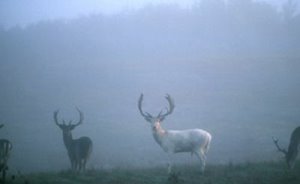
Rare white deer spotted in the Forest of DeanA Thing of beauty, but also a freak of nature. A startling white deer has been spotted roaming the woods in the Forest of Dean over the Christmas period.

Not the stuff of mythology or legend, it is in fact believed to be an fully-grown buck that was first spotted around Ruardean Woodside two years ago. Since then, there have been regular sightings by walkers and the shot taken above by a local photographer.

St Briavels resident Nick Davis was driving from Parkend to Lydney when he spotted the deer grazing in woods.

"In the woods I spotted something white up on the bank," he said.

"I turned around and there she was.

"There were a lot of rumours that there was only one white deer in the Forest but it seems that's not the case."

The deer was also recently spotted on the top of Harrow Hill, by the Holy Trinity, Forest Church, on Boxing Day by Mark Prosser, 26, who was driving to visit his family near Drybrook.

"It was just having a bit of a stroll," said Mr Prosser, from Gloucester. "It was a full-grown deer and was down among all the bracken grazing."

Natalie Beecham, from the Gloucestershire Wildlife Trust, said: "This will be a one-off deer in the whole population, rather than several deer."

She said white deer obtained their colour due to a chromosome abnormality.

"It's a bit of a freak of nature and it is rare to see them," she added.

Via : this is gloucestershire
Photo : www.richardblair.com

Hamster, Snake Best Friends at Tokyo Zoo

Hamster, Snake Best Friends at Tokyo ZooGohan and Aochan make strange bedfellows: one's a 3.5-inch dwarf hamster; the other is a four-foot rat snake. Zookeepers at Tokyo's Mutsugoro Okoku zoo presented the hamster - whose name means "meal" in Japanese - to Aochan as a tasty morsel in October, after the snake refused to eat frozen mice.

But instead of indulging, Aochan decided to make friends with the furry rodent, according to keeper Kazuya Yamamoto. The pair have shared a cage since.

"I've never seen anything like it. Gohan sometimes even climbs onto Aochan to take a nap on his back," Yamamoto said.

Aochan, a 2-year-old male Japanese rat snake, eventually developed an appetite for frozen rodents but has so far shown no signs of gobbling up Gohan — despite her name.

"We named her Gohan as a joke," Yamamoto chuckled. "But I don't think there's any danger. Aochan seems to enjoy Gohan's company very much."

The Tokyo zoo also keeps a range of mostly livestock animals, and promotes "cross-breed interaction," according to Yamamoto.

But Gohan and Aochan's case was "was a complete accident," Yamamoto said.

Via : AP.

27 Unknown Species found in dark, damp caves

New Animal Species Found in Calif. CavesTwenty-seven previously unknown species of spiders, centipedes, scorpion-like creatures and other animals have been discovered in the dark, damp caves beneath two national parks in the Sierra Nevada, biologists say.

"Not only are these animals new to science, but they're adapted to very specific environments — some of them, to a single room in one cave," said Joel Despain, a cave specialist who helped explore 30 of the 238 known caves in Sequoia and Kings Canyon National Parks.

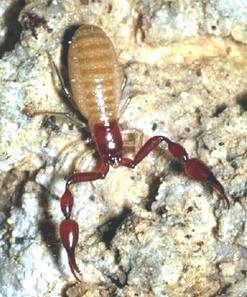
The discoveries included a relative of the pill bug so translucent that its internal organs are visible, particularly its long, bright yellow liver. There was also a daddy long legs with jaws bigger than its body, and a tiny fluorescent orange spider.

"Many people will be looking at these trying to find where they fit in the tree of life," said Darrell Ubick, a cave biologist with the San Francisco-based California Academy of Sciences.

While it is extremely rare to find new mammal or bird species on the surface, caves still hold an abundance of secrets. Like the deep sea, they are often difficult to reach and seldom explored.

Discovering so many species was thrilling, said Jean Krejca, a consulting biologist with Austin, Texas-based Zara Environmental who helped lead the three-year exploration. The findings were released Tuesday.

"You get the feeling you're Lewis and Clark, charting undiscovered territory," she said. "Caves are one of the last frontiers."

Park officials plan to adopt measures to protect the caves, Despain said. Most of them are not accessible to the public, and can be visited only by researchers or experienced explorers with permits.

The species have yet to be named, described scientifically and placed in the continuum of known living organisms.

"We don't know how long they live, what kind of habitat they prefer, how many offspring they have, or how sensitive they are to human disturbance," Krejca said. "There's still so much to learn."


Source: AP.

In search of spoon-billed Sandpiper...

In search of spoon-billed SandpiperA team of international bird experts will begin surveying the Bangladeshi coast Tuesday in search of the endangered spoon-billed sandpiper, whose population they believe has dwindled to just 350 pairs in the wild, organizers said Monday.

With its spatulate bill the Spoon-billed Sandpiper, Eurynorhynchus pygmeus is unique among waders and, with its rare occurrence and localised breeding area in Northeast Russia, a very charismatic species.

Recent research carried out at selected breeding sites indicates a dramatic decline in the species' fortune. The current global population might not exceed 300-350 breeding pairs.

The Russian survey had no explanation for the decline, and experts believe something may be happening to the birds along the migratory route.

A 20-member survey team, divided into three groups, will scan southern Bangladesh's Bay of Bengal coastline from Jan. 17-25 for the birds and study their winter habitat to see if factors - such as reduced food reserves or human activities - are causing them to die out.

"We hope our survey will yield results that will help save them," said Enam Ul Haque, a Bangladesh water fowl census coordinator.

Vegetable oil : the Fuel of the Future

bio diesel : the fuel of the futureThe next time you're driving along Pensacola streets and suddenly smell french fries, you might be following Greg Threadgill's diesel truck rather than passing a fast-food restaurant.

Threadgill and partner Robbie Clopton, co-owners of T-Gill Fuels, are among the first in Northwest Florida to venture into the bio-diesel business.

And they believe it will prove to be a good move - both financially and environmentally.

Bio-diesel can be made readily from any kind of vegetable oil, including soybeans, peanuts, or sunflower seeds, and some types of algae.

Even used vegetable oil from restaurants' frying vats can be a source of biodiesel fuel once filtered, Threadgill said. In fact, when German inventor Rudolph Diesel first developed the diesel engine in 1895, he designed it to run on vegetable oil.


Continued....

Penguins waddle but they dont fall down

amazing penguinsWith their feathery tuxedoes and charming Chilly Willy-waddle, penguins are the quintessence of cute. Small wonder they're featured in Coke commercials, movies like "Madagascar" and "March of the Penguins" and children's toys galore.

But one University of Houston professor is looking into a serious side of these ultra-cute creatures.

Dozens of teeter-tottering penguins are the subjects of a research project investigating balance and locomotion.

"Compared to other terrestrial animals, penguins have an excessive amount of side-to-side, waddling motion," Max Kurz, UH Health and Human Performance professor said. "If humans waddle too much they fall, but penguins somehow overcome this. They may have an elegant movement strategy for stability that we're unaware of."

Kurz hopes that learning about the penguin's distinctive waddle will help those with walking challenges, such as the elderly, those with leg or foot injuries and toddlers learning to walk.

The research findings could even allow the development of more mobile robots.

For UH researcher Kurz, his subjects' funny, cuddly nature is just an incidental advantage.

His current research will provide a springboard for future studies on the unique locomotive strategies of penguins. Next, he will examine the running patterns of the penguins. And if you think penguins are cute waddling, just wait till you see them in a hurry.

As comical as his subjects may be, Kurz remains a scientist first and an amused spectator second.

"You can't help smiling," Kurz said, "but this is serious research, and the results could make a real difference in many people's lives."

Photos and videos available at www.uh.edu

Source : University of Houston.

How Carnivorous plants set traps

How Carnivorous plants set trapsScientists from Stuttgart, Germany, have demonstrated how carnivorous plants set traps using an ingenious material design.

Plants are able, using organic substances, to achieve effects that are otherwise mostly known only from technical materials, according to researchers from the Max Planck Institute for Metals Research and the University of Hohenheim. They say these plants catch insects and hold them using traps with a double layer of crystalline wax.

The upper layer has crystalloids that contaminate the attachment organs that insects use to adhere themselves to surfaces. The lower layer additionally reduces the contact area between the insect feet and plant surface.

The insects thus slip into the pitcher-shaped traps, where they are digested, according to the study published The Journal of Experimental Biology.

Via : UPI.

Global Warming isolates northern Canadian natives

canada environmentA group of Canadian aboriginal leaders said on Friday their northern communities are in a state of emergency because abnormally mild temperatures have hindered construction of vital winter roads.

"We were told all along that global warming is going to affect our roads and now we see that today," said David Harper, chief of the Garden Hill First Nation.

"Without the winter roads, all essential goods have to be flown into the region."

About 10,000 people live on four Indian reserves in the Island Lake region of Manitoba, some 450 kilometres northeast of Winnipeg. There are no roads leading to the remote region and goods are normally brought in by air. But during the coldest months of the year, winter roads are built on frozen lakes and rivers to cut transportation costs.

"It is a looming crisis and something that needs to be addressed," said Dennis Meeches, acting grand chief of the Assembly of Manitoba Chiefs.

The roads can only be built on ice that is at least 71 centimetres (28 inches) thick. It is still only 20 cm (8 inches) thick in some areas, Harper said.

The road's completion date has been pushed back from January 16 to February 1, and Harper said it may not open at all.

Aboriginal leaders are seeking government assistance to tide them over.

The unusual weather has been caused by a persistent westerly from the Pacific Ocean rather than the more typical northerly from the Arctic, the national weather service said.

Via : Reuters.

Low cost Eco - friendly electricity from trees

low cost eco friendly electricity from treesMaybe the time has come to stop searching for an alternative, low-cost, eco-friendly source of electricity. MagCap Engineering’s Canton company claims to be developing a process of generating low cost electricity from living trees.

MagCap Engineering LLC wants to patent a process that converts the natural energy of a tree to usable direct-current electricity, company President Chris Lagadinos said.

He added, "It's a renewable source and it's an unlimited source. It's virtually untapped. The issue is clean energy and it's readily available. There are trees everywhere."

Though Jim Manwell, director of the University of Massachusetts Amherst's Renewable Energy Resource Laboratory, questioned the potential of MagCap's plans. "I'm wildly skeptical," he said. "I would need to see proof before I believed it. It strikes me as pretty questionable for a number of reasons."

Manwell said his skepticism is science-based.

"There's a fundamental law of physics," he said. "The energy has to come from somewhere."

Via : Mass High Tech.

Kenya's Elephants facing famine

Elephants in Kenyan national parks and reserves are leaving their drought-stricken sanctuaries to search for water and food near human settlements, where they have attacked starving people trying to protect their crops. U.N. agencies have warned of hunger across the region because of drought and say the situation in eastern Kenya is particularly serious. People reportedly have died of hunger during what officials say is the country's worst drought in 22 years.

"Kenya Wildlife Services personnel have been deployed to several areas to drive the elephants back to the park" said Connie Maina, spokesperson for the Kenya Wildlife Services. She added, "This involves the use of a lot of vehicles and a helicopter that flies low and pushes them in the direction where we want them to go. It is a very expensive operation."

African elephants are the largest living land mammals, weighing up to 6.5 tons. An elephant eats approximately 5 percent of its body weight and drinks about 30-50 gallons of water a day, according to the Africa Wildlife Foundation.

The foundation says there are between 300,000 and 600,000 elephants on the continent - about half the estimated total of 40 years ago.

On Jan. 1, President Mwai Kibaki said food shortages would affect some 2.5 million Kenyans in northern districts, and he declared the crisis a national disaster.

The head of the U.N. environment agency linked the drought to environmental damage to forests, grasslands, wetlands and other critical ecosystems as well as global climate change.

Klaus Toepfer, who is based in Nairobi, urged countries in east Africa to invest in and rehabilitate their "natural or nature capital" to protect vulnerable communities against future droughts, which threaten misery for millions alongside livelihoods and livestock. He urged donor countries to help.

"Drought is no stranger to the peoples of East Africa. It is a natural climatic phenomenon. What has dramatically changed in recent decades is the ability of nature to supply essential services like water and moisture during hard times," Toepfer said, according to a statement from the U.N. Environment Program.

"This is because so much of nature's water and rain-supplying services have been damaged, destroyed or cleared."

He added: "These facts are especially poignant when you factor in the impact of climate change, which is triggering more extreme weather events like droughts."

Via : AP.

Fears over welfare of exotic bird

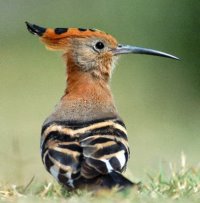
Fears over welfare of exotic birdExcitement has been growing among bird-watchers after several sightings of a hoopoe – a European woodland bird which usually migrates to Africa at this time of year.

Somehow it has been blown hundreds of miles off course and has ended up in Gosport. But there is concern among 'twitchers' who have converged on Felicia Park Urban Community Farm, in Hardway, that the bird could die.

The hoopoe uses its long, curved bill to dig for food, but if the land is frozen over it proves harder to find.

Adrian Thomas, spokesman for the 'Royal Society for the Protection of Birds', said: "It's possible with luck and mild weather it may survive. It's a tough call."


Via : Portsmouthtoday.co.uk

Eco - friendly alternative to paper : Banana Paper

Eco - friendly alternative to paper : Banana PaperCurrent methods of making paper are often toxic, wasteful of water and energy, and terribly unsustainable. Recycling only goes so far; what's needed is an alternative method of making paper that is less-harmful to begin with. Papyrus Australia thinks they have that alternative: Banana Ply Paper.

"Banana trees only live for about a year, and after the bunch is harvested, the tree is allowed to rot down. In Banana trees, the fibres run the full length of the tree, compared to around 1mm in wood-chip. Our process takes advantage of the properties of this waste material, in a process that has more similarities to the production of plywood than to paper. No toxic chemicals or water is needed, and the process uses a fraction of the energy of a typical wood-chip paper plant."

Apart from the environment - friendly aspect, the production costs for banana paper are estimated to be less than 1/5th of those traditional pulp paper, and the capital investment costs just 3% of those required for pulp paper production. The big question: is there enough banana production to keep up with the global demand for paper?

via : world changing.

Rare Ice Age Fish given a fresh start

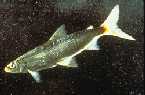
environment and natureENVIRONMENT Agency experts have spent 11 nights searching the shallows of a Cumbrian lake as part of an operation to save the vendace, a rare Ice Age fish, from extinction.

The country’s rarest fish should have been airlifted to a tarn high up in the Borrowdale fells weeks ago, but breeding wasn’t on its mind and the chance was lost.

Now around 134,000 eggs have been taken from vendace in Derwentwater, near Keswick.

The fish were slow to spawn and could not be caught.

When vendace finally made the move into shallow water, experts were ready to help relieve them of their eggs, before transferring them into flasks and setting off over the hills to 1,500ft Sprinkling Tarn at the northern end of the Scafell mountain range.

Vendace can only be found in Derwentwater and Bassenthwaite, but poor water quality, the silting-up of spawning grounds and competition from other species are posing serious risks. New breeding locations are vital to their fight for survival.

Environment Agency senior technical specialist Cameron Durie said 29,000 eggs and 25 adult fish had already been successfully transferred to Daer reservoir in south-west Scotland.

Vendace"Ideally, vendace need to be in water at a higher altitude," said Mr Durie.

He added: "Monitoring the eggs, which have been distributed in gravel on the shoreline, is not feasible, but we have kept some eggs back in a hatchery at Keswick, which will be checked during the incubation period."

John Pinder, manager of the Bassenthwaite Lake Restoration Programme, said he hoped the Sprinkling Tarn move would be successful and that new stocks of vendace could be established.

"We have all got to work towards safeguarding the survival of this very important and historic breed of fish," he added.


Via : News & Star.

Hundreds of dying birds dropping from sky

CARLOW TOWN shoppers encountered extraordinary scenes at the weekend as countless numbers of dead birds dramatically fell from the sky.

The astonishing sight was witnessed in Tullow Street, Kennedy Street, Graiguecullen and around Carlow Castle as pigeons, sparrows, blackbirds and even robins dropped from the sky at an alarming rate.

While some birds were found dead, others were completely debilitated, horrifying passers-by in their shocked state and continual spasms.

Suspicions are rife that the birds had fallen victim to a substance known as "sleepy crow" which anaesthetises birds and is often used in the control of pigeons.

However the use of the substance at this time of year when birds are hungry and at their most vulnerable has angered animal-welfare groups.

"It's very irresponsible to do something like that," remarked Carlow ISPCA Inspector Jean Bird.

"There are other ways of dealing with unwanted pigeons," she added.

Ms Bird stated that there was no way of putting a figure on the number of birds that died, but it is believed to have been in excess of 100.

"Definitely a large number but we'll never know the full extent. When the birds are unable to fly many of them would have died with the cold, have been run over or fallen victim to animals," she added.

Ms Bird indicated that cats or dogs that came in contact with the affected birds might also fall victim to the substance over the coming days.

Cllr Mary White stated that she had been contacted by a number of people who had been shocked by the upsetting sights of birds falling from the sky on Saturday.

"Children on Tullow Street in particular were horrified by this," she said.

Cllr White called for a full investigation into the matter and questioned if the action was contrary to the 1976 Wildlife Act or if people require a licence to use the substance.

© Carlow Nationalist.

Farming destroying Brazil's Wetlands

World's Largest Wetlands - Brazil's Pantanal WetlandsA new study says deforestation is destroying Brazil's vast Pantanal wetlands.

Conservation International says increased grazing and agriculture has destroyed 17 percent of the native vegetation in the Pantanal, considered the world's largest wetland.

At the current rate, the Pantanal's original vegetation would disappear in 45 years, researchers said.

Conservation International is calling for increased government regulation and better coordination of conservation efforts, as well as implementation of a broad environmental restoration program in devastated areas.

UPI.

Coelacanth threatened by commercial fishing fleets

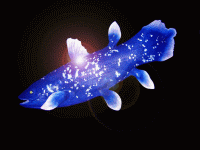
Endangered Species CoelacanthIt is not every day that you come face to face with a dinosaur dating back 400 million years, but for the fishermen in Kigombe on Tanzania's northern coast it has become almost routine.

In the middle of Kigombe, a village of simple huts on this breathtaking edge of the Indian Ocean, a young fisherman stood proudly before a large green plastic container. Ceremoniously he reached inside and hauled out a monster of a fish, slapping its 60kg (132lb) of flesh on a table, where three children gawped at its almost human-like 'feet'. This is a living fossil, a fish with limbs, a creature once believed extinct: a coelacanth.

Now it seems that man may have discovered the fish just to eradicate it, as ever deeper trawling throws up serious fears for the already dwindling populations of the fish, which lives at depths of between 100 and 300 metres (328ft to 984ft).

The appearance of these creatures off the Tanzanian coast is a dramatic and as yet unfinished chapter in the extraordinary story of the coelacanth, an ancient fish that was 'rediscovered'. The coelacanth evolved 400 million years ago - by contrast Homo sapiens has been around for less than 200,000 years - and was believed to have gone the way of the dinosaurs until one was caught off the coast of South Africa in 1938.

Hassan Kolombo, a programme co-ordinator and his colleague, Solomon Makoloweka, said they had been pressuring the Tanzanian government to limit trawlers' activities. He said: 'I suppose we should be grateful to these trawlers, because they have revealed this amazing and unique fish population. but we are concerned they could destroy these precious things. We want the government to limit their activity and to help fund a proper research programme so that we can learn more about the coelacanths and protect them.'

The Guardian.

Environmentalists Worry on China's Kangs

Li Xiulan says that for all of her 73 winters in China's frigid northeast, her best weapon against the biting cold has been a pile of bricks. Like millions of northern Chinese, Li wakes up every morning on a kang - a traditional brick sleeping platform heated from below by burning straw or coal during the long, dark winter months.

"Without the kang, winter would be unbearable," she said, bundled in layers of sweaters and warming her hands before the gentle heat of the kang in her grandchildren's bedroom.

Environmentalists worry that kangs waste energy and add to choking air pollution. But people here say it's the only way to survive in China's version of Siberia, where the winter sun sets at 3 p.m. and temperatures can plunge to 40 below zero.

For centuries, the kang - pronounced "kahng" - has been the center of winter life in the northeast. Families crowd together on them to sleep under mountains of quilts. Children play on them during the day. Parents do as many chores as they can on them.

In the countryside, kangs have survived the arrival of electricity, mobile phones and the Internet. Families gather on them to watch satellite television and DVDs.

Scientists warn that kangs waste fuel, pollute the atmosphere and endanger the health of farm families by releasing carbon monoxide and other dangerous gases indoors.

Towns throughout the northeast are wreathed in smoke as families fire up their kangs for the evening. More prosperous homes emit the fetid odor of burning coal.

"In order to protect the environment, the government should encourage and guide farmers to give up using kangs," Wang said. "But the kang cannot be phased out in a short time because the farmers in these areas depend on them."

The government and environmental groups have sponsored research to produce alternatives using such things as natural gas from decomposing farm waste.

But for many families, the kang is close to perfect.

"When it gets cold, everyone has to have a kang," said Zhou's father-in-law, Dou Zhiquan, 56. "Without one, you can't survive the winter."

Associated Press.
Exmoor Ponies at risk can help save rare wildflowers

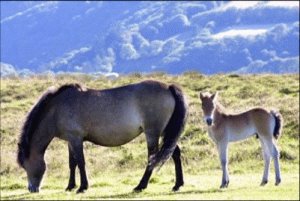
ENDANGERED Exmoor poniesENDANGERED Exmoor ponies have been sent far from home to preserve the rare wildflowers of a moorland wilderness.

Most breeds wouldn't touch the rough grassland of Kielder, in the north of Northumberland, but to the hardy Exmoor, it poses no difficulties.

In keeping the grass short, they allow the rare flowers, which are unique to the sprawling Borders grassland, to flourish.

Schoolchildren at Kielder First School will help to look after the ponies, who will be setting up home in a neighbouring field.

Three ponies will be sent to two sites in Kielder and the neighbouring village of Bellingham.
The animals have been provided by the Moorland Mousie Trust, a charity which works to find new homes for the ponies and preserve the breed.

Tom Boden, of the Northumberland Wildlife Trust, said: "Grazing is very important for wildlife conservation.
"That this project will protect a rare breed and benefit young people at the same time makes it extra special. Everyone is really looking forward to getting the ponies."

Newsquest Media Group.

'Arctic' worst-affected by global warming

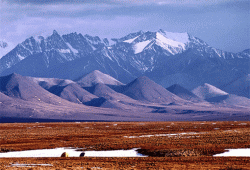
effect of global warming on arcticA University of Alabama scientist says global warming is not nearly as global as some people think.

With a global average temperature that was .54 F degrees warmer than seasonal norms, 2005 tied with 2002 as the second warmest year in the past 27, data processed at the university revealed.

Temperatures in 2005 followed a general pattern seen since 1978, with the most significant warming seen in the northernmost third of the planet. Large regions of slightly warmer than normal temperatures covered much of the globe.

The Arctic atmosphere, however, has warmed more than seven times faster than that over the southern two-thirds of the globe.

"It just doesn't look like global warming is very global," said John Christy, director of UAH's Earth System Science Center.

"The carbon dioxide from fossil fuels is distributed pretty evenly around the globe and not concentrated in the Arctic, so it doesn't look like we can blame greenhouse gases for the overwhelming bulk of the Northern Hemisphere warming over the past 27 years" he said. "The most likely suspect for that is a natural climate change or cycle that we didn't expect or just don't understand."

United Press International.

Mystery disease strikes 40,000 trees

horse chestnut trees are in dangerBRITAIN’S horse chestnut trees are falling victim to an aggressive disease that has spread throughout the country, striking more than 40,000 last year.

Ancient avenues of trees have been devastated. In parks and historic gardens, groundsmen have seen dark sores where trees have shed their bark and bled a glutinous resin. The tissue beneath dies, and if the sores form a ring around the trunk the tree withers.

Tree pathologists had assumed it to be the work of a species of Phytophthora fungus related to a disease commonly called sudden oak death. “Now we realise it’s something different,” said Professor Clive Brasier, of Forest Research, part of the Forestry Commission. “We don’t know what it is. It’s more aggressive and it’s being found all over the country.”

Kashmir and Himalayas could face more disastrous earthquakes

more possible earth quakes in kashmir and himalayas in India
One of the world's leading seismologists has warned of the possibility of more disastrous earthquakes in the Kashmir region over the next 50 years.

Roger Bilham told the BBC News website that Kashmir could experience quakes more severe than the one which killed more than 73,000 people in October.

Mr Bilham has been working in quake-affected areas of Pakistan for the past two months.

He is considered an authority on the Himalayan faultline.

Mr Bilham said his research, using data stretching back 500 years, had shown that huge amounts of energy had been stored in the faultline but it was unevenly distributed.

"This meant that when (the tectonic plates) do go, they are very likely to go with a very large earthquake," he said.

"Our study basically showed that there were four places that could have a magnitude 8.2 earthquake or more.

"It also showed that the Kashmir region could have something like a magnitude eight earthquake."

China announces naming contest for pandas.

Chinese officials have launched a contest to name the two giant pandas being donated to Taiwan.

Cao Qingyao, a spokesman for the State Forestry Administration, said that the ideal name would have two Chinese characters and represent the aspirations of the people of Taiwan, which China considers a breakaway province, Xinhua, the official government news agency, reported. At a Beijing news conference, Cao said that everyone is free to submit names, including overseas Chinese, Taiwanese and residents of Macao.

The couple was selected for compatibility from available pandas at the Wolong Giant Panda Research Center in Sichuan Province. The male was known there as "Xiaoguaiguai" or "little darling" and the female as "Huangmao Yatou," which translates as "chit of a girl."

Cao said the Forestry Service will select 10 finalists, which will be released on China Central Television on the eve of the New Year Festival. Television viewers will make the final choice.

One set of names that have already been suggested by many people might do more to express the aspirations of China with regard to Taiwan than vice versa. They are "Tuan Tuan" and "Yuan Yuan." "Tuan yuan" means reunion in Chinese.

United Press International.

The marine life in the Gulf of Maine surprised scientists.

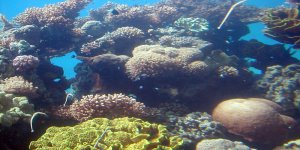
Marine LifeThe diversity of marine life in the Gulf of Maine region is much greater than previously thought.

The Gulf of Maine Program of the Census of Marine Life, with the Huntsman Marine Science Center of St. Andrews, New Brunswick, announced today the first count of known marine species in the Gulf of Maine region — more than 50% larger than previous estimates. The count is 3,317 species and includes both year-round species and those that migrate to the region seasonally. The Canadian-US project is part of the international Census of Marine Life. The count comes from the new Gulf of Maine Register of Marine Species, the first register of its kind for the region. According to Evan Richert, project director for the Gulf of Maine Census, "The register serves as a baseline for understanding the biodiversity of this renowned and heavily exploited region of the Atlantic Ocean."

Among the species are 652 kinds of fish, 184 species of birds, and 32 species of mammals. Microscopic plants, including the algaes, alone account for an impressive 733 different species, or more than one of every five species in the Gulf of Maine region.

"This register is the first, essential step toward understanding the Gulf of Maine as a whole ecosystem," said Lewis Incze, chief scientist of the Gulf of Maine Census, which is based at the University of Southern Maine. "This lays the foundation for the next step, which is to understand how these species interact with each other and their surroundings to make the ecosystem work."

For an animated map that shows the decline of some of the best known of these, such as cod and haddock, see the Gulf of Maine’s Dynamic Atlas.

Some species are recently arrived as the result of human activities, such as shipping, and are unwelcome invaders that are altering local ecosystems. These include the European green crab, a small shore crab that is an efficient colonizer and predator.

~Sensus of Marine Life.

Global warming shrinking size of 'world's rooftop' in Tibet.

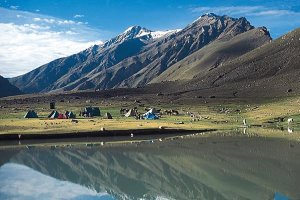
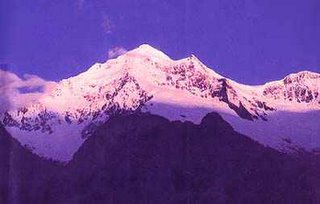
world's rooftop - Meilixueshan is meltingThe "rooftop of the world" is melting.

Thanks to global warming, glaciers on the Tibetan Plateau are rapidly liquefying, possibly causing many of the region's water woes--especially flooding--in the past decades. The huge meltdown could cause serious ecological trouble in the future, including water shortages, Chinese experts say.

The Tibetan Plateau is the source of many major rivers in Asia.

It is estimated that the annual amount of water melting from the glaciers is equal to the total annual flow volume of the Yellow River.

One of the examples of the speedy meltdown phenomenon is the massive melting glacier on Meili Snow Mountain (Meilixueshan). The 6,740-meter-high mountain is located in the border area between Yunnan province and the Tibetan autonomous region at the southern end of the Tibetan Plateau.

Local Tibetan Buddhists worship the sacred mountain. About 300 Tibetans live in Miyon village, located on the mountain at 2,350 meters above sea level.

The Chinese Academy of Sciences' Institute for Cold and Arid Regions Environment and Engineering Research is in charge of researching the glacier's meltdown.

Usually, glaciers expand as snow accumulates in winter and shrink when they melt in the summer. However, because this glacier is located on a sharp slope, it used to increase in size at a higher rate than other glaciers. For example, from 1959 to 1971, the glacier expanded more than 800 meters.

But the glacier started shrinking by about 20 to 30 meters a year in 1998.

"The abnormal climate has been the norm since 2000. The rise in temperature and the decrease in snowfall is accelerating the speed of the glacier melting," said an official with the meteorological bureau.

"If global warming continues, water volume in large rivers will decrease by 10 to 20 percent in the next 50 to 100 years," He said.

Yao also said: "There is a possibility that 50 to 60 percent of the glaciers on the Tibetan Plateau will disappear in the next 100 years. As long as global warming continues, it is impossible (for us) to prevent the glaciers from melting.

"All we can do to slow the melting speed is to take measures against global warming."

Blind man turns barren land into forest.

A blind man has turned a five-kilometre stretch of barren land near his home in Orissa into lush greenery during the last 12 years. Sounds amazing but it's true.

Srinibas Jena of Bhagipur village in the coastal district of Cuttack, in eastern India, did not use any magical prowess to achieve the feat.

Jena lost his eyesight when he was only five years of age. One day, he heard on radio a programme on the importance of forests and healthy environment.

"The programme spoke of how one could be self-reliant by planting trees. That is how the mission started," said Jena.

"Initially, I planted a few cashew nut trees but now there are mango, guava and other fruit bearing trees as well," Jena told IANS.

The man, who walks with the help of a stick, rarely makes a mistake while identifying the trees.

Bhagipur is home to about 1,500 people of different castes. Jena has become a celebrity among villagers with his tree plantation and conservation drive.

His 'forest territory' begins from the backyard of his home and ends at a hill in government land.

"When Jena lost his vision due to illness, we thought he would be a burden on us and would have to survive by begging. But he proved us wrong. He is better than many people with eyesight," said Jena's farmer-uncle Bagirathi.

Jena watered the saplings and protected the trees from marauding elephants with the help of his wife Kuni, who married him to help in his mission.

"He has the amazing power to predict elephants approaching our plantations," Kuni said.

"Each year, we earn our livelihood selling fruits from these trees. Sometimes we earn Rs.20,000 and sometimes it even goes up to Rs.30,000. Whatever we get we are happy," she said.

Remarked Suresh Mishra, an officer of the wildlife department: "It's great work, something which will inspire people to follow in Jena's footsteps."

~IANS.

Rare wild Red Ibis discovered in northwest China.

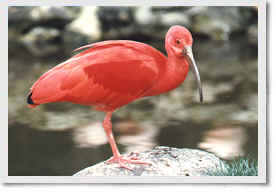
Red IbisA large habitat for wild red ibis - one of the world's most endangered birds - has been discovered in northwest China.

About 100 red ibises have been seeking temporary resting places in the forest near the Caihe village of Huaishuguan since winter set in, said Zhai Tianqing, head of the Red Ibis Protection Center of Yangxian.

Zhai believes the village is the world's largest habitat for the birds, Xinhua news service reported.

The number of red ibises in China has risen from seven in the early 1980s to about 800 today, including more than 400 wild red ibises, after the Chinese government ordered that they be protected, Xinhua said.

The birds disappeared rapidly starting in the 1950s due to poaching, pollution and the use of pesticide.

United Press International

Mysterious Two Headed Snake goes on sale.

snakeFor sale: one snake. Albino. Has two heads. Asking $150 000 (about R950 000) or best offer.

The World Aquarium in St Louis has been home to We, a one-of-a-kind two-headed albino rat snake, since 1999.

Aquarium president Leonard Sonnenschein has decided to sell the reptile, and bidding on e-Bay will start at $150 000 (R950 000).

Sonnenschein said: "When people see it they are awe-struck."
The 6-year-old snake came to the aquarium's attention when its previous owner distributed a circular offering it for sale days after its birth.

The aquarium paid $15 000 (about R95 000), knowing full well that most two-headed snakes don't live more than a few months.

But We has survived and thrived. At 2.5cm thick and 1.2m long, she is a healthy size for a rat snake.

While her body is white, the heads have a reddish appearance.

We has survived because, unlike some two-headed animals, both mouths are connected to the same stomach, Sonnenschein said.

Van Wallach of Harvard University's Museum of Comparative Zoology said We should live another 10 to 15 years.

"We expect the sale of We to be on the same level of demand as a priceless art object," he said.

The snake has been in the spotlight before. In 2004, a disgruntled City Museum worker stole We.

Authorities found the snake in the garage of the man's home in Illinois.

"He thought he was going to sell it," Sonnenschein said.

"The thing is, it's the only one in the world."

Source : DailyNews.

Mass whale deaths in New Zealand

death of whales - news on nature & environmentForty-nine pilot whales died after a mass stranding at a remote beach on Farewell Spit, at the top of New Zealand's South Island, the Department of Conservation announced on Sunday.

Eight of the whales died within a few hours of the pod being stranded on Saturday and the others had to be shot because the sea was too rough and the site too remote to launch a rescue operation, officials said.

A department spokesman told Radio New Zealand the whales were not thought to be from the same pod that stranded on Puponga Beach, near Farewell Spit, before Christmas.

The latest stranding occurred at low tide about one kilometre from shore and the whales were spread over six hectares.

Department spokesperson Greg Napp said it would have been too dangerous to try to refloat the whales as anyone who lost their footing may have been swept out to sea.

Dolphin conceived from frozen sperm dies.

Japan's first dolphin conceived from frozen sperm died at an aquarium outside Tokyo, keepers said.

Will, a 2,3m, 170kg bottlenose dolphin conceived by artificial insemination and born in September last year, died last week, Kamogawa Sea World said.

"We're all overcome by grief," said Kazutoshi Arai, a spokesperson for the aquarium, in Chiba prefecture.

Keepers transferred Will to a special treatment pool last week with his mother, Norma, after the young dolphin suddenly stopped eating. Preliminary autopsy results suggested that Will suffered from volvulus, or an abnormal twisting of the intestines.

Scientists have been trying to improve insemination methods in an attempt to reduce inbreeding in captivity and preserve endangered dolphin species.

It is unclear whether Will's death had anything to do with the method of his conception.

The world's first artificially conceived dolphins were born in 2001 in Hong Kong.

Source : DailyNews.

Columbia Glacier has retreated 9 miles over the past 20 years

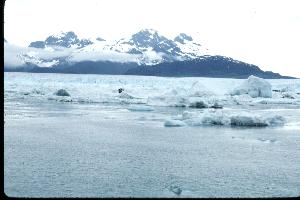
columbia glacier is retreating faster - nature & environmental newsColumbia Glacier, in Prince William Sound, has retreated nine miles over the past 20 years in a meltdown punctuated by ice quakes and submarine gushes of water triple the flow of the Mississippi River.

"It's 50,000 cubic meters per second ... for seven minutes," said glaciologist Tad Pfeffer early this month from the American Geophysical Union meeting in San Francisco.

"It comes out of the bottom of the glacier, and it flows up the front of the ice cliff and spreads out on the surface."

Columbia Glacier has now pulled back to the halfway point of its expected retreat. But it may be on the cusp of a much faster withdrawal across a broad inner bay, Pfeffer reported.

Scientists expect the glacier to retreat another nine or 10 miles over the next 15 to 20 years, creating a deep-water fjord with new shorelines and as-yet unseen geographic features.

The balance between the glacier's forward motion and the rate that icebergs calve has kept the glacier's face in that area. But that may be about to change, Pfeffer said.

As the glacier slowly pulls north into deeper water, the shoreline will peel away, exposing a longer face of ice to the ocean. At the same time, the glacier is up to 1,300 feet thinner in places.

Mississippi-size flushing from beneath, thinner ice on top, more exposure to the sea -- it adds up, Pfeffer said.

"All those things together reinforce my belief that this thing is going to retreat faster, certainly faster than it has in the last five years," Pfeffer said. "Maybe it's going to retreat faster than it has ever before."

Authorities Hunt for 'Bigfoot' in Malaysia

mysterious bigfootAuthorities began searching the jungles of southern Malaysia on Friday for the mythical "Bigfoot" following a reported sighting of three giant human-like beasts, officials said.

Wildlife authorities may set up cameras in the 309 sq.mile Endau Rompin National Park in Johor state to see if the creatures do exist, they said.

Park director Hashim Yusof ventured into the jungle Friday to survey the site where three fish farm workers reportedly saw the beasts - two adults and a young one - last month, Hashim's secretary told The Associated Press. She did not want her name used and declined to give details.
The fish farm workers were in the jungle to clear an area for a fish pond. They alerted their employer who photographed what appeared to be footprints measuring up to 17 inches, said Lim Teong Kheng, the chairman of the Malaysian Nature Society in Johor.

He said brown hair reeking of body odor was also reportedly retrieved nearby, and a broken tree branch at the site appeared to indicate the creatures were some 10 feet tall.

The New Straits Times newspaper on Thursday reprinted one of the photographs taken by the fish farmer, showing what appears to be a triangular depression in the undergrowth.

Lim welcomed the investigation by the national park saying "Bigfoot" sightings have been reported for decades in the area but never taken seriously for lack of evidence.

"Nobody dared say anything in case people say they are out of their minds," Lim told the AP. "But sightings have been enumerated by many others before this at the Endau Rompin area."

"Bigfoot" is a popular name given in the United States to giant hairy creatures walking on two legs. Sightings of such beasts are reported in many parts of the world but never confirmed.

source : optimumonline.net